
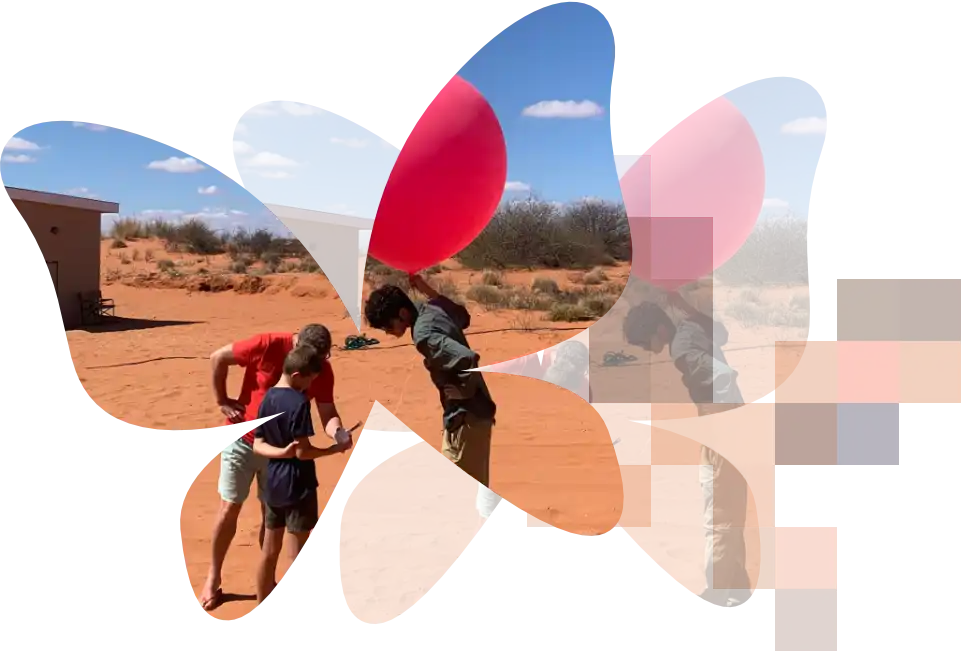
The Gilchrist Fieldwork Award of £15,000 is offered annually to support original and challenging overseas fieldwork carried out by small teams of university academics and other researchers.
Established in 1990, the award is fully owned and funded by the Trust. While the Trust retains overall responsibility, the Royal Geographical Society manages the day-to-day administration of the award.
Applications from geographers, ecologists, anthropologists, archaeologists, earth and environmental scientists, and researchers from related fields are all strongly encouraged. There should be strong links and collaborations with local agencies and communities. Local benefits should be demonstrated in applications. The award is open to established researchers. Applicants must hold a PhD at time of application and be based in a UK Higher Education Institution or equivalent research establishment.
2026 Fieldwork Award
Recipient name: Professor Maria Shahgedanova
Recipient university: University of Reading
Project title: Quantifying Contributions of Mountain Cryosphere Components to Groundwater Recharge Using Isotopic Analyses
Fieldwork location(s): Kazakhstan, Kyrgyzstan and Uzbekistan (Central Asia)
Abstract: The mountain cryosphere and groundwater are critical to water security in the arid mountain–foothill systems of Central Asia. Rapid decline of the cryosphere driven by climate change threatens surface water availability, increasing reliance on groundwater. This project will conduct an extensive field sampling campaign in glacierized catchments of the Tien Shan. Samples from groundwater, streamflow, and meltwater sources will be analysed for water stable isotopes, tritium, and hydrochemistry. These datasets, which are currently scarce for groundwater in the region and globally, will underpin Bayesian mixing models to quantify cryosphere–groundwater connectivity, groundwater recharge sources and timescales, informing climate adaptation and water management strategies.
Maryliflower, CC BY-SA 4.0
Apply now
Please complete the following form to start the process. The Royal Geographical Society (with IBG) will be in touch to explain the next steps. Please visit the Royal Geographical Society (with IBG) for full details.
Previous recipients
- 2025: Brennan O’Connell (University of Cambridge). Tidal Flats to Wetlands: Blue Carbon Dynamics in Tasmania’s Coastal Landscapes
- 2024: Dr Nicholas Girkin (University of Nottingham). Quantifying the extent and resilience of carbon storage in the Pantanal, the World’s largest wetland.
- 2023: Dr Callum Munday (University of Oxford). The Kalahari Heat Experiment.
- 2022: Dr Max Webb (Royal Holloway, University of London). Isolation in Paradise – How island arc collision and rapid tectonic uplift have influenced species diversification in remote New Guinea.
- 2018: Dr Melissa Murphy (University College London). High Arctic Rivers: A source or sink for atmospheric carbon dioxide?
- 2016: Dr Farnon Ellwood (University of the West of England). How does converting tropical forest to oil palm affect ecosystem function?
- 2014: Dr Heidi Burdett (University of St Andrews). Past, present, future: determining the climate tolerance thresholds of Maldivian corals, and the impact this has on the nation’s natural capital.
- 2012: Professor Stephen Darby (University of Southampton). Mud, Monsoons and the Mekong: Using Tonle Sap Lake Sediment Records to Derive a 5000 Year Record of the Asian Monsoon and its Impacts on Mekong River Flood Regimes.
- 2010: The award was not given in 2010.
- 2008: Dr Alun Hubbard (University of Wales Aberystwyth). An integrated field remote-sensing and modelling programme on Russell Glacier catchment of meltwater and basal glacial dynamic response.
- 2006: Dr Neil Stuart (University of Edinburgh). Characterisation of the major vegetation assemblages found in the Rio Bravo savannas, radar and optical remote sensing.
- 2004: Professor Andrew Warren (University of Oxford). The Dustiest Place on Earth: Measurement and Modelling of Dust Production and Transport in Northern Chad.
- 2002: Dr Nick Branch (Royal Holloway, University of London). An examination of the long-term environmental history of the Machu Picchu Sanctuary, Peru, since the end of the last glaciation (10,000 years ago).
- 2000: Professor Peter Smart (University of Bristol). Exploration of the nature, and hydrological, geochemical and microbiological behaviour of the extensive underwater cave systems (and associated aquifer) which extends some 10km inland from the Caribbean coast of the Yucatan Peninsula.
- 1998: Dr Piers Vitebsky (Scott Polar Institute, University of Cambridge). A study of recent social economic and environmental changes in the northern part of the Sakha Republic, north-eastern Siberia, particularly the isolated hunting and reindeer-herding communities in the Verkhoyansk mountain range.
- 1997: Dr Peter Lovatt (University of Aberdeen). Geological mapping of the northern Clavering Island to improve understanding of the Caledonian fold belt and younger cover rocks on Clavering Island. The work contributed to extensive studies made by the Cambridge Arctic Shelf Programme (CASP) during their East Greenland Project.
- 1996: Dr Alistair Kirkbride (Lancaster University). The Chuja-Katun river system in the Altai mountains contains a legacy of large-scale fluvial landforms associated with cataclysmic flooding during the last glaciation and possibly before. This study documented the number, timing and magnitude of the catastrophic floods.
- 1994: Dr David Nash (University of Brighton). A collaborative project between the universities of Brighton, Luton, Cape Town and Botswana to provide information on the past hydrology and dynamics of the Okavango Delta. A total of eight sediment cores were extracted and analysed from the field area.
- 1992: Dr Tom Spencer (University of Cambridge). The expedition studied past environmental variability over geological time scales through topographic survey and fossil coral sampling in the Northern Cook Islands. Based on results derived from past and present environments, management strategies were outlined to prevent the deterioration of contemporary reef and lagoon environments in the northern Cook Islands, along with scenarios of future environmental change for the strategic planning needs of the Cook Islands Government.
- 1990: Dr J A Briggs (University of Glasgow). Sustainable Agro-Ecological Development Potentials of Arid Environments Influenced by Groundwater Infiltration: A Study of the Wadi Allaqi Region, Southern Egypt. Research into the soil, water and vegetation resources of Wadi Allaqi, and the responses of the local Bedouin population to these resource opportunities were used to document the suitability of the Lake Nasser shorelands for managed and sustainable agricultural development.
- 1990: Dr Sarah Metcalfe (Universities of Hull and Sheffield). A study of the Chihuahuan desert, northern Mexico since around 18,000 years BP, using cores of lake sediments. Present day diatoms, water quality and ecology were also collected.